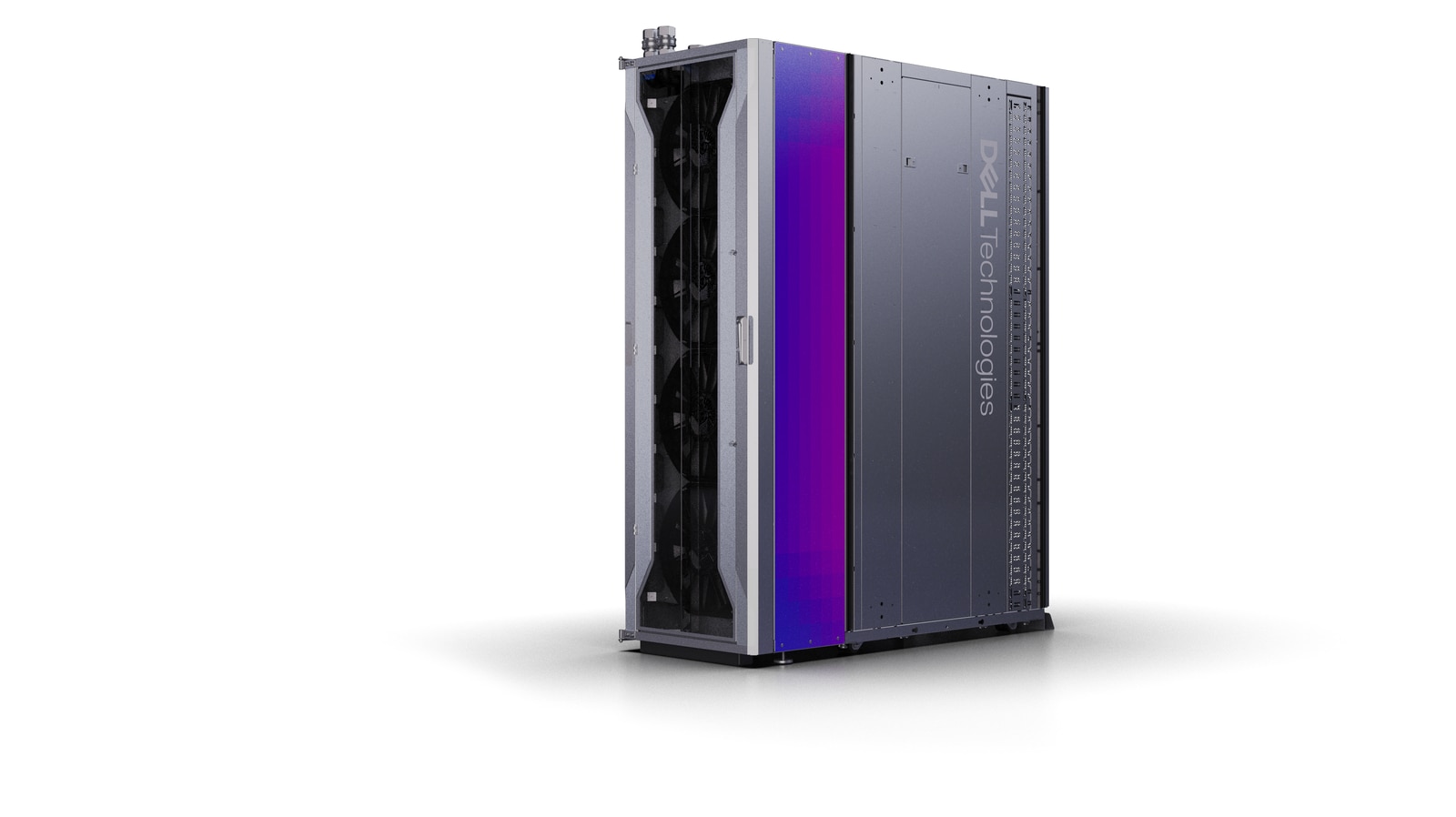
Dell Technologies reported a $95 billion backlog for AI-optimized servers at the end of its fiscal second quarter, after booking a record $60.9 billion in AI-server orders during the quarter.
Those numbers matter because they show the AI boom as something physical rather than abstract. Large models require accelerators, but accelerators arrive inside systems that also need CPUs, memory, networking, storage, racks, power delivery and cooling. Dell sits in the layer where many of those components become deployable infrastructure.
The scale of the quarter
For the fiscal second quarter ended July 31, 2026, Dell reported:
- $47.0 billion in total revenue, up 58% year over year;
- $16.4 billion in AI-optimized server revenue, up 100% year over year;
- $60.9 billion in AI-server orders booked during the quarter;
- a $95 billion AI-server backlog at quarter end.
Dell also raised its full-year fiscal 2027 revenue guidance to $192 billion, from a previous $167 billion, and raised its AI-optimized server revenue outlook to $74 billion.
The guidance numbers are management expectations rather than completed results, but the order and backlog figures show demand already contracted into Dell’s pipeline.
Why AI infrastructure is more than GPUs
Public discussion often compresses AI infrastructure into one component: the accelerator.
In practice, a modern AI cluster is a system. Thousands of accelerators have to exchange data quickly enough that they behave like one computing fabric. That requires high-speed interconnects and networking. Training and inference workloads require memory and storage systems capable of feeding data without becoming bottlenecks. The racks themselves consume enormous amounts of power and produce enormous amounts of heat.
Server vendors therefore become an important indicator of whether demand for AI compute is turning into real deployments.
Dell’s results suggest that, at least among its customers, the answer is yes.
A backlog is not the same as revenue
The $95 billion figure needs careful interpretation.
Backlog represents orders that have not yet been recognized as revenue. It is evidence of future contracted demand, but it is not cash already earned or systems already deployed.
Delivery schedules, customer requirements, component availability and other factors determine how quickly backlog becomes revenue. Dell’s own financial materials include extensive warnings that future results can differ from expectations.
That distinction matters because large AI-infrastructure numbers can otherwise make the build-out appear more complete than it is.
The broader hardware effect
Dell’s quarter also showed growth outside the specifically labelled AI-server category. Traditional servers and networking revenue rose sharply year over year, while storage and commercial-client revenue also increased.
Not all of that growth should automatically be attributed to AI. But it illustrates an important point: major computing transitions rarely affect only one product category.
An AI deployment may require new networking, storage, client systems, management software and data-centre capacity around the accelerators themselves.
The result is a multiplier effect across the computing supply chain.
What to watch
The most useful indicators over the next few quarters will be:
- how quickly Dell converts the AI-server backlog into recognized revenue;
- whether order growth remains strong after the current wave of large deployments;
- whether margins hold as competition in AI systems increases;
- and whether infrastructure demand broadens beyond a relatively small number of very large customers.
For now, Dell’s results make one part of the AI investment cycle unusually visible: the software boom is becoming a server, networking, storage, power and cooling boom too.